The Little Things That Make Knitting and Crochet Easier
I've always thought that one of the best things about knitting and crochet is that there is always something new to learn.
Not necessarily a complicated new technique or an ambitious project. Sometimes it's a tiny adjustment that suddenly makes something easier, neater, or simply makes more sense.
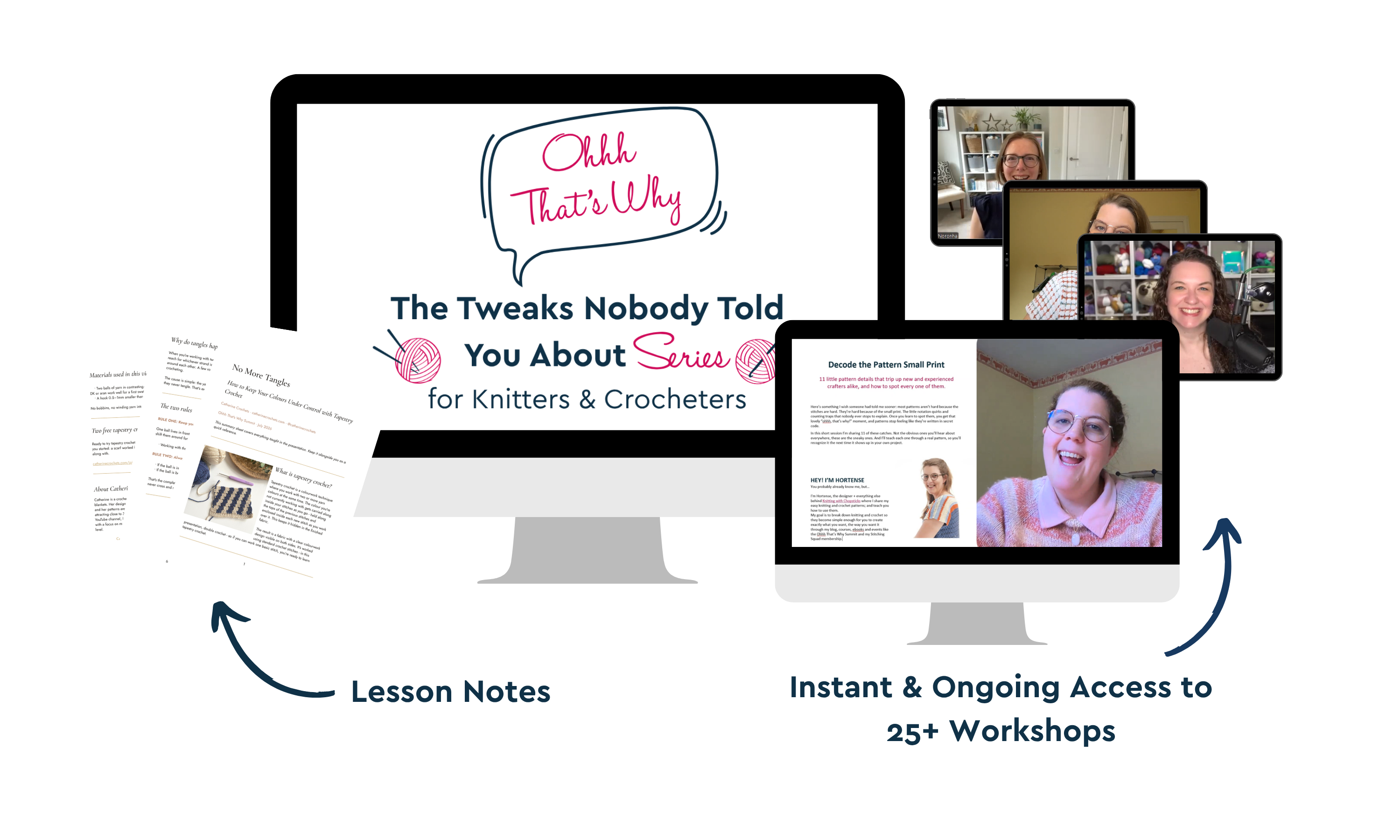
I've been discovering quite a few of those little things through the Ohhh That's Why: The Tweaks Nobody Told You About Series from Knitting with Chopsticks — and I'm already using some of what I've learned in both my knitting and crochet.
I'm also part of the Knitting with Chopsticks support team, so I've had the opportunity to see the series from the inside and work with the material myself.
Disclosure: I'm part of the Knitting with Chopsticks support team, and this post contains my affiliate link. If you purchase through my link, I may earn a commission at no additional cost to you.
It's the "why" that makes the difference
Most of us learn to knit or crochet by following instructions.
We learn what to do first, and eventually we learn enough that we can work things out for ourselves.
But there are still those moments when you think:
"Why does mine look like that?"
Or:
"Why does this technique work better than the way I've been doing it?"
That's what I like about this series.
It's not simply a collection of tutorials showing you how to make something. The workshops look at the little details and techniques that can change the way you approach your craft.
There are more than 25 workshops covering both knitting and crochet, with topics ranging from gauge and knitting charts to colour dominance, yarn choices, edge stitches and construction. There are crochet workshops too, covering things such as foundation stitches, turning chains, colour management and granny squares.
And yes, there is even a workshop about fixing that annoying gap in your socks.
As someone who designs and knits a lot of socks, that one definitely caught my attention.
You don't have to be a beginner
I think there's a tendency to assume that educational resources are mainly for people who are new to knitting or crochet.
But being experienced doesn't mean you've learned everything.
I've been knitting for years, and I'm still picking up new techniques and finding better ways of doing things. That's part of what keeps the craft interesting.
Some of the things I've learned through this series are already making their way into my own knitting and crochet. They're not necessarily huge changes. They're the kind of small adjustments that you learn once and then wonder how you managed without them.
And that's probably my favourite kind of knitting knowledge.
Learn it when you need it
Another thing I like about the series is that you don't have to sit down and work through everything at once.
The workshops are relatively short, around 20–25 minutes each, and you have ongoing access to the lessons and supporting materials.
So you can browse through, find something that catches your interest, or go looking for help with a particular problem.
You can learn something today and come back to it months from now when you actually need it.
That's much more useful to me than trying to absorb a huge amount of information simply because it's there.
The best tips are the ones you actually use
For me, that's what makes this series worth talking about.
I'm not recommending it because it sounds good on paper. I'm recommending it because I've already taken things from these workshops and put them into practice.
The best knitting and crochet tips are the ones that change what you do next. I've already put some of these into practice — and I think you might find a few that make you wonder why nobody told you sooner.
Take a look at the Ohhh That's Why Series